🌿 Vietnam’s Hidden Waterfalls: Secret Gems Deep in the Jungle
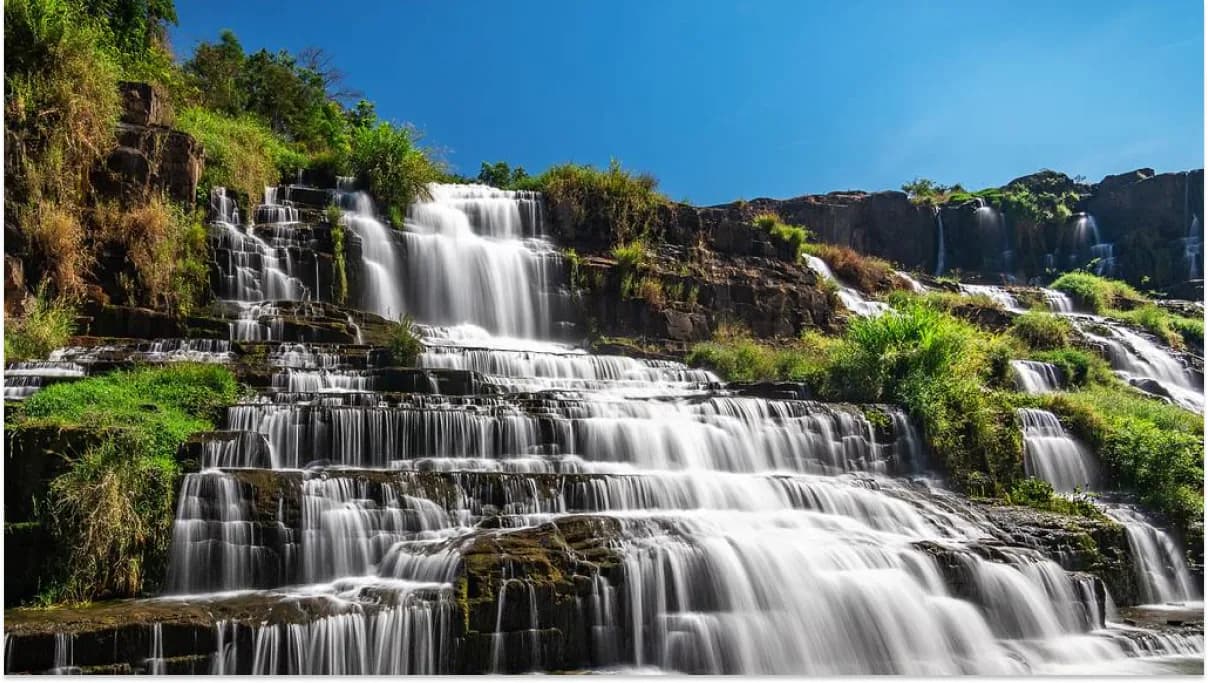
My journey to discover Vietnam’s lesser-known waterfalls began with a mix of excitement and curiosity. Unlike the famous Ban Gioc or Pongour, this adventure took me deep into the forest — where no tour buses go, where birds replace city noise, and waterfalls roar freely into jade-green pools.
Each step into the wilderness felt like peeling back another layer of Vietnam — pure, untamed, and full of hidden beauty.
1. K50 Waterfall (Gia Lai)
After a long trek through the dense Kon Chu Rang forest, I finally reached K50 — and it took my breath away. The trail was narrow and damp, canopied by giant trees that filtered sunlight into a mystical green glow. When the sound of rushing water grew louder, my heart raced.
And there it was — K50, a magnificent white curtain of water plunging into a turquoise basin below. Sitting on a rock with my feet in the icy water, I realized I’d found something rare — a place untouched by crowds, where nature still reigns supreme.
✨ Highlight Experience: Camp overnight near the waterfall and fall asleep to the lullaby of rushing water.
2. Phi Lieng Waterfall (Lam Dong)
Leaving the bustle of Da Lat behind, I followed a red dirt trail leading to Phi Lieng waterfall. Hidden deep in a K’Ho ethnic village with no signs to guide me, I had to ask a local farmer to show the way. After 40 minutes of trekking, I stood before a breathtaking scene — water crashing straight down from the cliffside, sunlight filtering through mist to form a faint rainbow.
I stood there for a long time, listening to the raw power of water colliding with rock, feeling small yet alive amid the grandeur of nature.
✨ Highlight Experiences: Swim beneath the falls — the cold, powerful water feels like washing away every worry.
3. Go Lao Waterfall (Hoa Binh)
During a trip to Mai Chau, locals urged me to visit Go Lao — a little-known waterfall tucked among lush hills. The road was rough, requiring a short hike after parking, but the reward was well worth it. The waterfall wasn’t towering, but it was graceful — a white silk ribbon cascading through emerald forest.
Local families often picnic here, children laughing and splashing in the stream. I joined them, sharing grilled bamboo rice (cơm lam) by the water — a simple, heartwarming meal that felt deeply authentic.
✨ Highlight Experiences: Enjoy a rustic picnic with locals and embrace the unfiltered beauty of daily mountain life.
4. Dak Ke Waterfall (Kon Tum)
On the way to Mang Den, I stumbled upon Dak Ke waterfall — calm and poetic in contrast to K50’s power. Here, the water trickled gently over layers of rock, surrounded by tall pine forests that whispered in the wind.
I spent a quiet afternoon sitting by the falls, jotting down thoughts in my travel journal. The air was cool, the mist delicate — it was easy to understand why Mang Den is called “the second Da Lat” of the Central Highlands.
✨ Highlight Experiences: Visit early in the morning when fog lingers — the waterfall transforms into a watercolor dream.
🌿 Tips for Exploring Vietnam’s Hidden Waterfalls
Go with a local guide: Many of these waterfalls aren’t on maps — it’s easy to get lost without local knowledge.
Pack smart: Bring trekking shoes, rain gear, insect repellent, and snacks.
Respect nature: Leave no trace — don’t litter, don’t disturb wildlife, and preserve the serenity.
🌟 Photography & Travel Tips
📸 Visit early morning or late afternoon for soft light and possible rainbows.
🧥 Bring a light jacket — the air near waterfalls is much cooler.
📖 Ask locals about the legends tied to each waterfall — you might uncover mystical stories never written in any guidebook.
Frequently Asked Questions
What are the best hidden waterfalls to visit in Vietnam?
The best hidden waterfalls include K50 Waterfall in Gia Lai (a magnificent white curtain plunging into a turquoise basin in the Kon Chu Rang forest), Phi Lieng Waterfall in Lam Dong (a powerful cascade near Da Lat hidden in a K’Ho ethnic village), Go Lao Waterfall in Hoa Binh (a graceful ribbon of white water near Mai Chau), and Dak Ke Waterfall in Kon Tum (a calm, poetic waterfall surrounded by pine forests near Mang Den).
Do I need a guide to visit hidden waterfalls in Vietnam?
Yes, a local guide is strongly recommended for visiting hidden waterfalls in Vietnam. Many of these waterfalls are not on maps and trails can be narrow, damp, and difficult to navigate without local knowledge. For example, Phi Lieng Waterfall has no signs and requires asking a local farmer to show the way through a 40-minute trek.
What should I bring when trekking to hidden waterfalls in Vietnam?
You should bring trekking shoes with good grip for damp and narrow trails, rain gear, insect repellent, snacks, and plenty of water. A light jacket is also recommended since the air near waterfalls is much cooler than surrounding areas. Bring a waterproof camera to capture the scenery, and visit early morning or late afternoon for soft light and possible rainbows.
Can you swim at hidden waterfalls in Vietnam?
Yes, swimming is possible at several hidden waterfalls. Phi Lieng Waterfall in Lam Dong is particularly popular for swimming beneath the falls, where the cold, powerful water creates an invigorating experience. Go Lao Waterfall in Hoa Binh also has streams where local families splash and picnic. Always exercise caution and check water conditions before swimming.
Where is K50 Waterfall and how do I get there?
K50 Waterfall is located deep in the Kon Chu Rang Nature Reserve in Gia Lai province in Vietnam’s Central Highlands. It requires a long trek through dense forest along narrow, damp trails canopied by giant trees. The waterfall plunges into a turquoise basin and is almost completely untouched by crowds. You can camp overnight near the falls for a full immersion in nature.
Conclusion
As I left these hidden waterfalls behind, I felt as though I’d opened a secret door into Vietnam’s untouched heart. It wasn’t just about the scenery — it was the silence, the purity, and the raw connection to nature.
These waterfalls — K50’s majesty, Phi Lieng’s power, Go Lao’s charm, and Dak Ke’s peace — are not just destinations; they are moments of stillness that refresh the soul.
Comments (0)